Applied end-to-end product thinking to design a personalized AI fitness experience grounded in user research, behavioral insights, and iterative testing.

Context
For the brand identity assignment, I created a brand named as Corey in the fitness domain and decided to extend the scope with a fitness app as a personal UX design project.
What is Corey?
Corey is an AI-powered fitness brand focused on making workouts, nutrition, and motivation more personalized and consistent through a digital fitness experience.
My Hypothesis
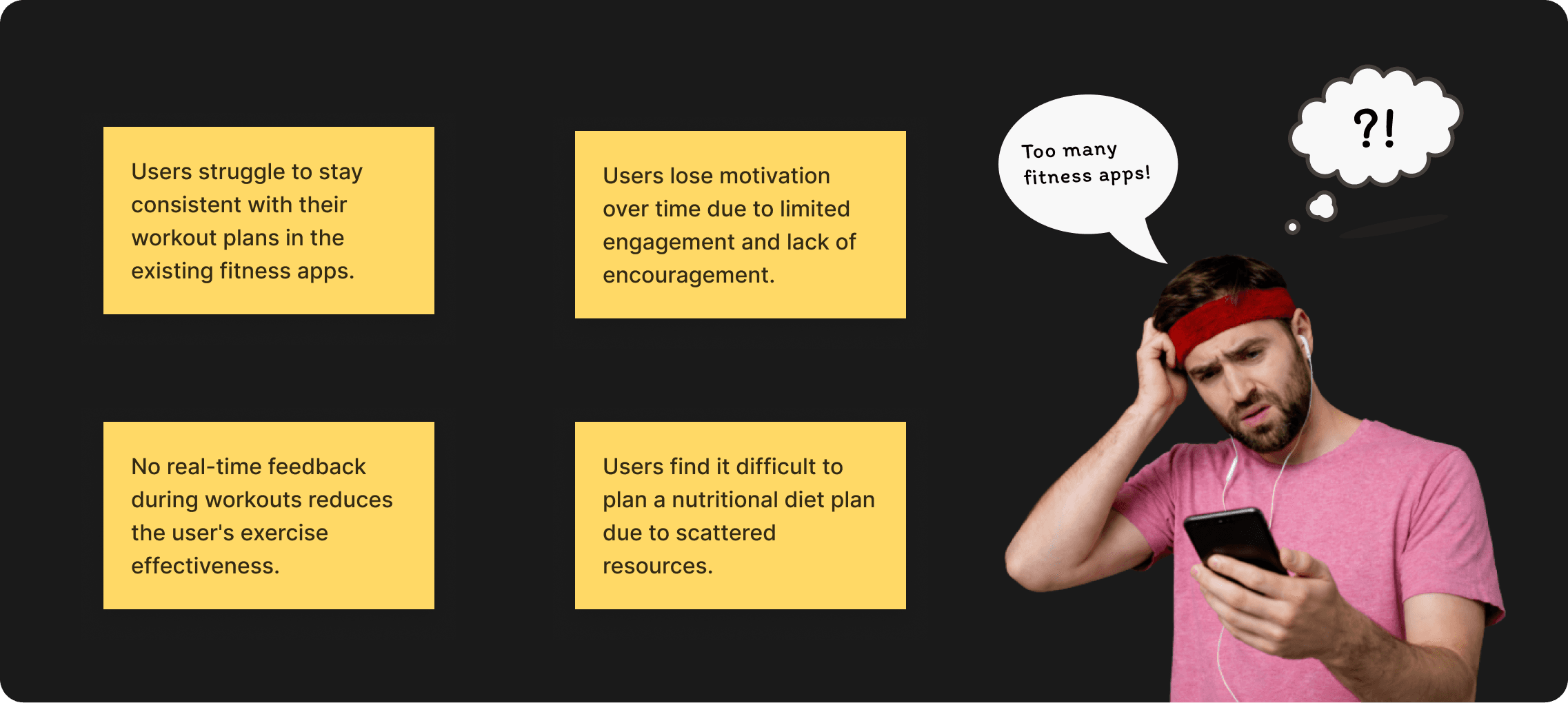
Goals of this project
1. Validate my above hypothesis around existing fitness challenges.
2. Empathize with the target audience to understand pain points.
3. Design a smart AI fitness solution that supports users in their fitness journey.
4. Test the solution with real users to evaluate usability and gather feedback.
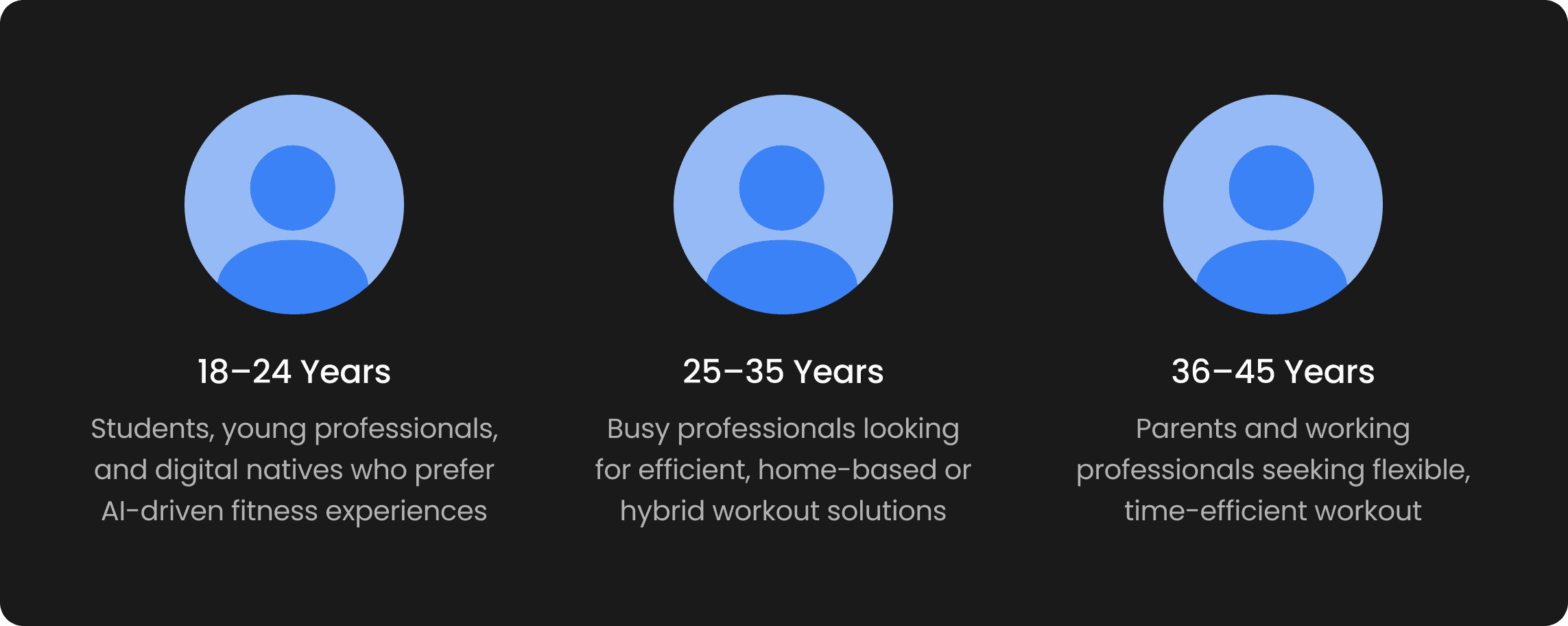
Target Age Group - 18 to 45 Years
Diving in Secondary Research
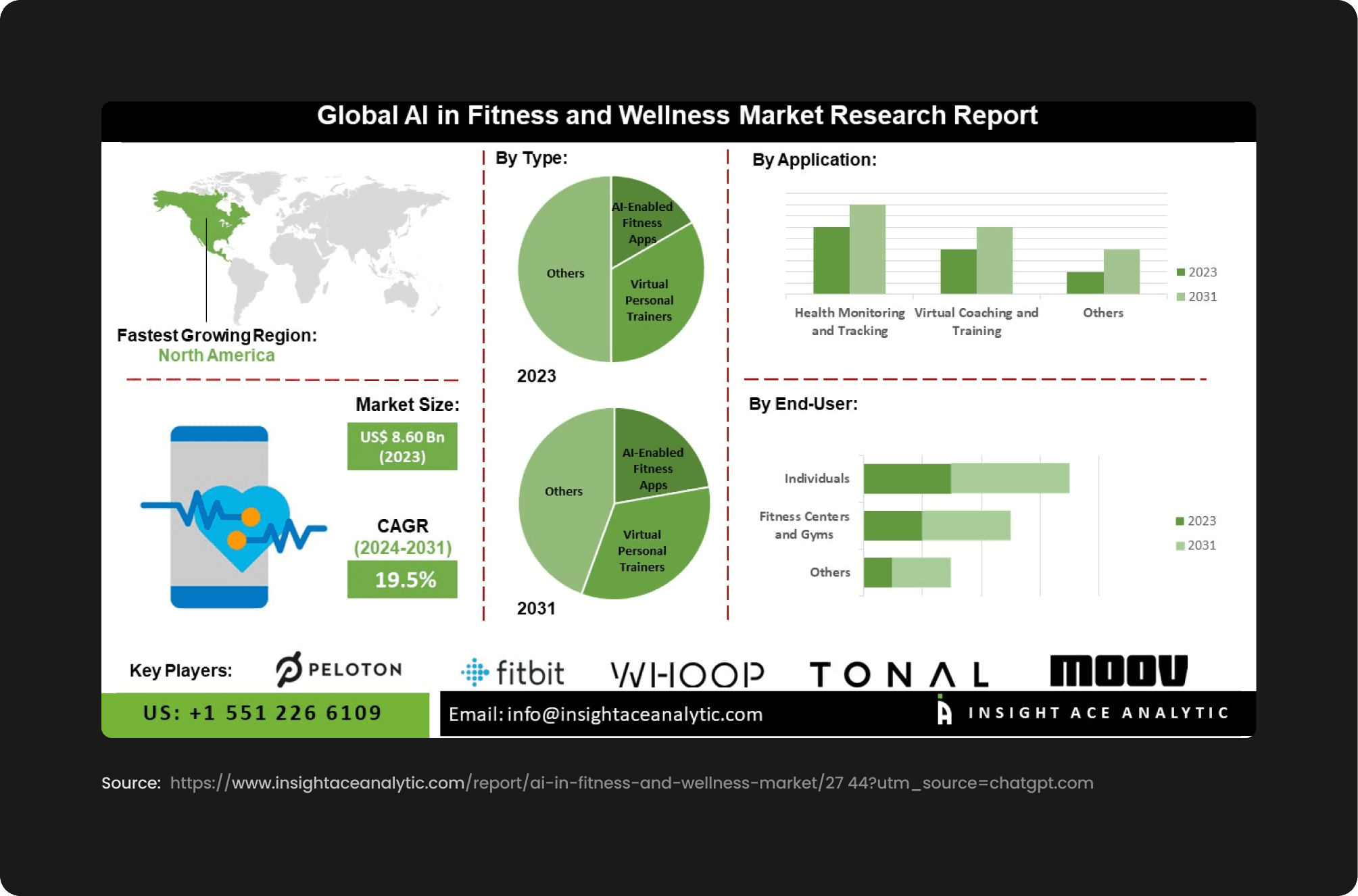
Market Overview
The market for personalized fitness applications has experienced significant growth in recent years. Specifically, the AI in the fitness and wellness market is expected to expand from USD 8.60 billion in 2023 to USD 34.73 billion by 2031.
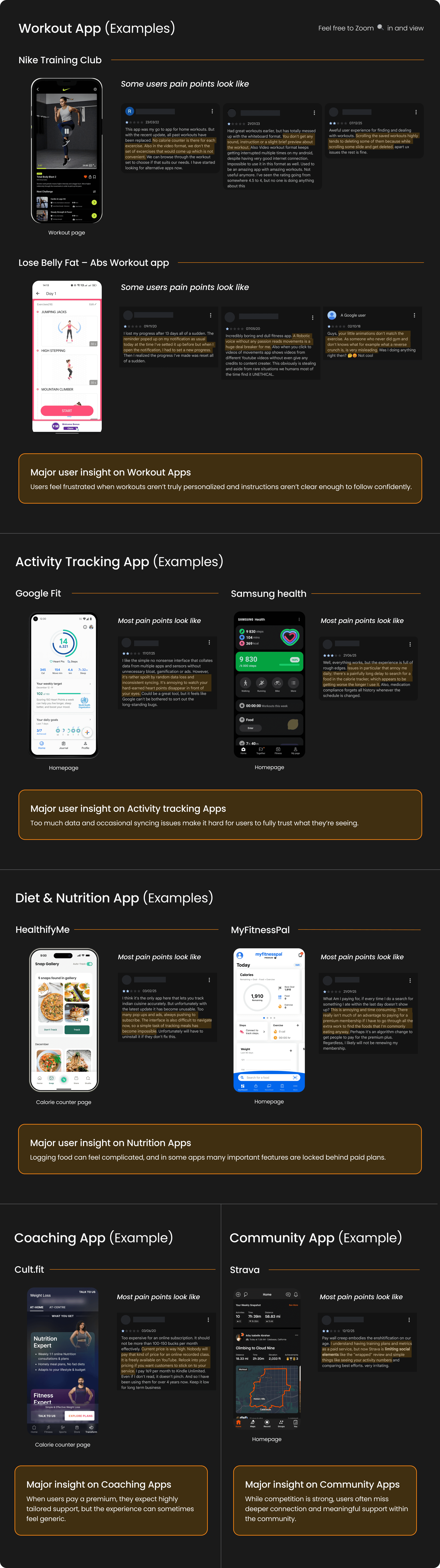
The Problem of Multiple Disconnected Fitness Apps
Most fitness apps focus on only 1 aspect- workouts, nutrition, tracking, or community. As a result, users jump between different apps to plan workouts, track meals, and monitor progress. Multiple apps cause confusion and require an extra effort from the user to stay consistent in their fitness journey.
Who are my competitors?
After empathising with the users using multiple fitness apps on the Google reviews. I wonder who I am competing with. So proceeded with 2 direct and 2 indirect fitness brand competitors.
Direct Competitors
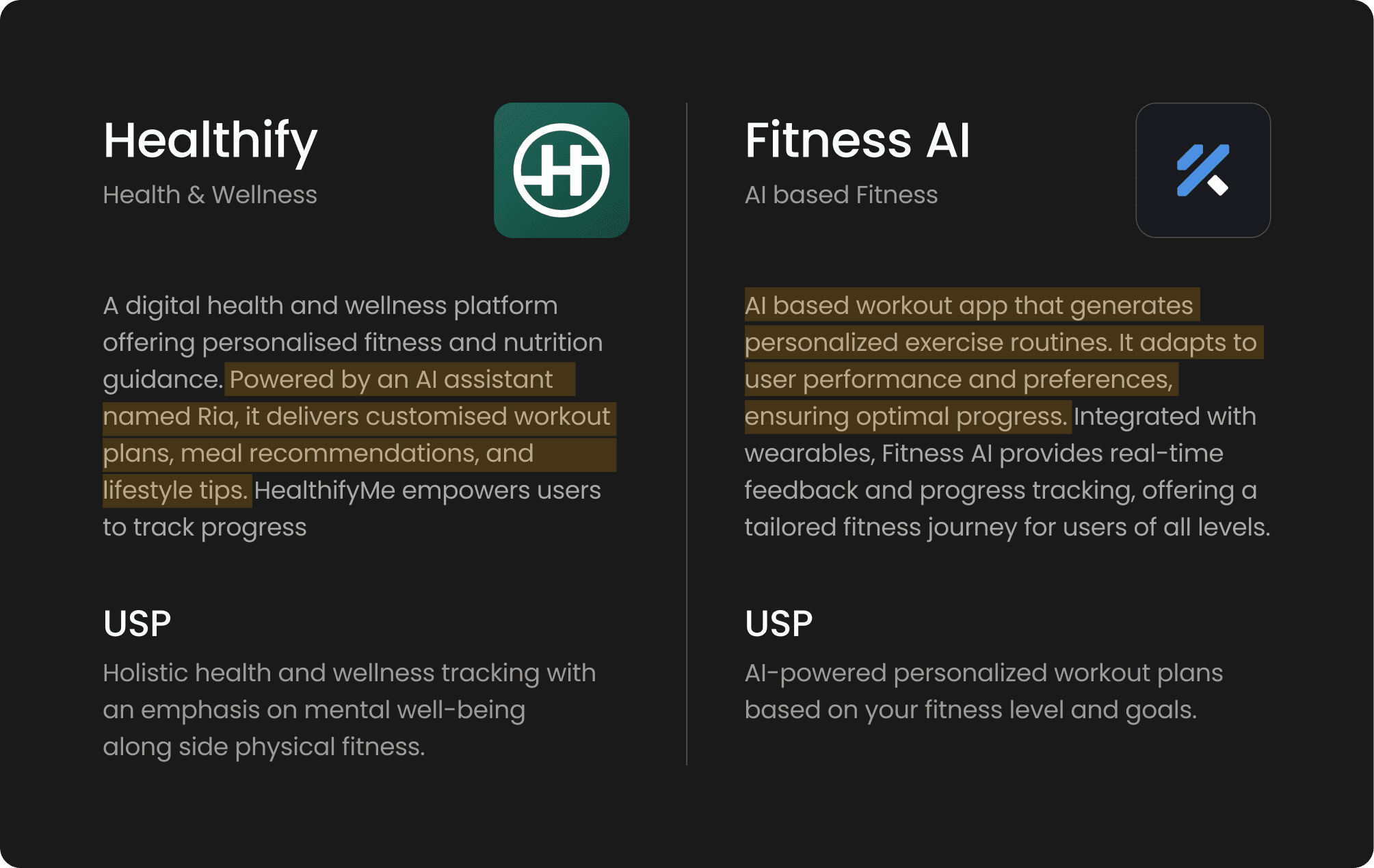
These are apps offering similar, AI-driven, personalized fitness guidance and meal planning:
HealthifyMe: Uses AI (Ria) for personalized workout and nutrition plans.
Fitness AI: Provides AI-powered workout personalization based on user data.
Indirect Competitors
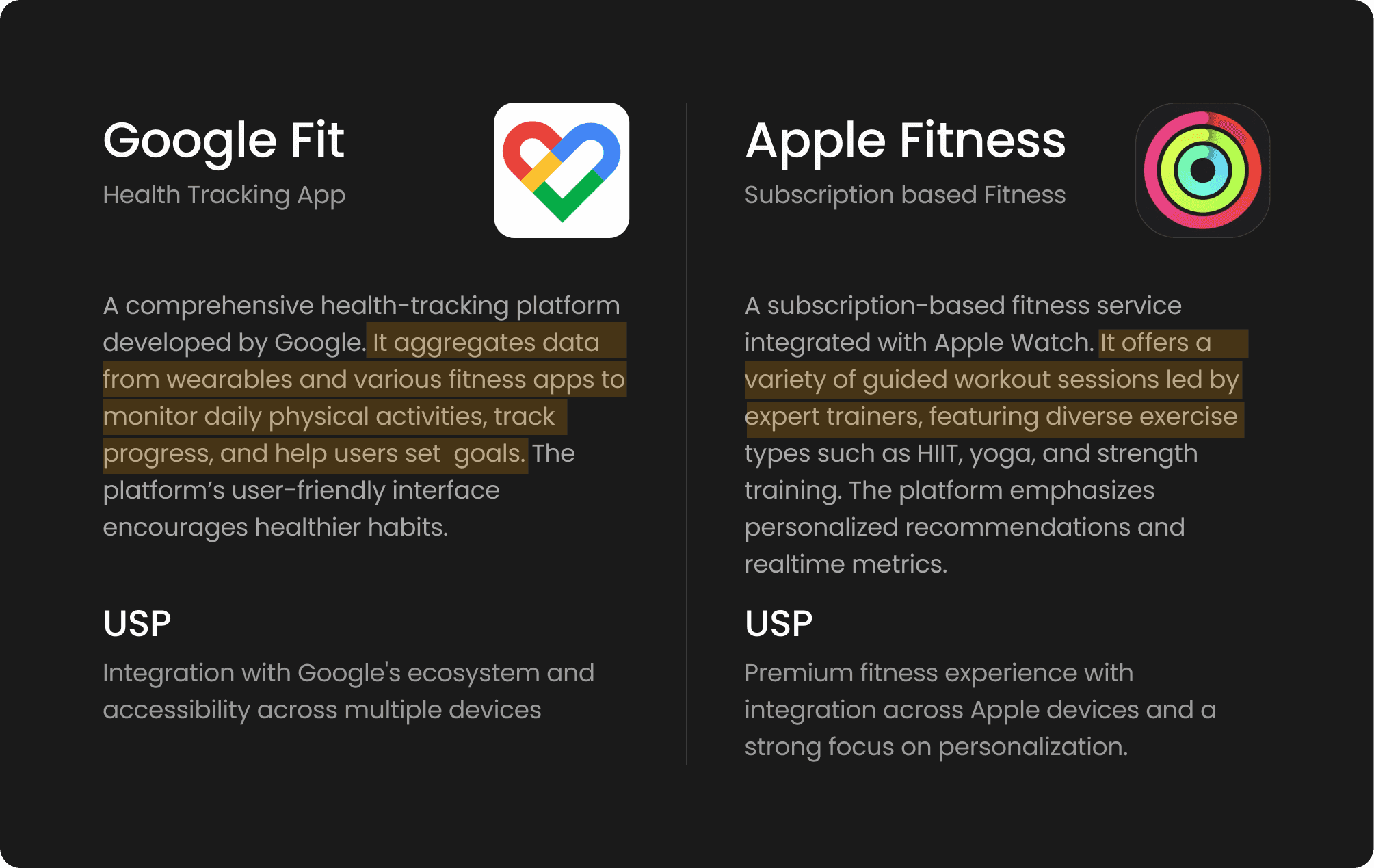
These brands offer fitness or nutrition tracking; they are big giants trusted by millions of users.
Google Fit: Acts as an activity tracker with basic insights without personalized meal or workout planning.
Apple Fitness+: Offers curated workouts led by professionals and integrates with wearables, but lacks deep AI-driven customization.
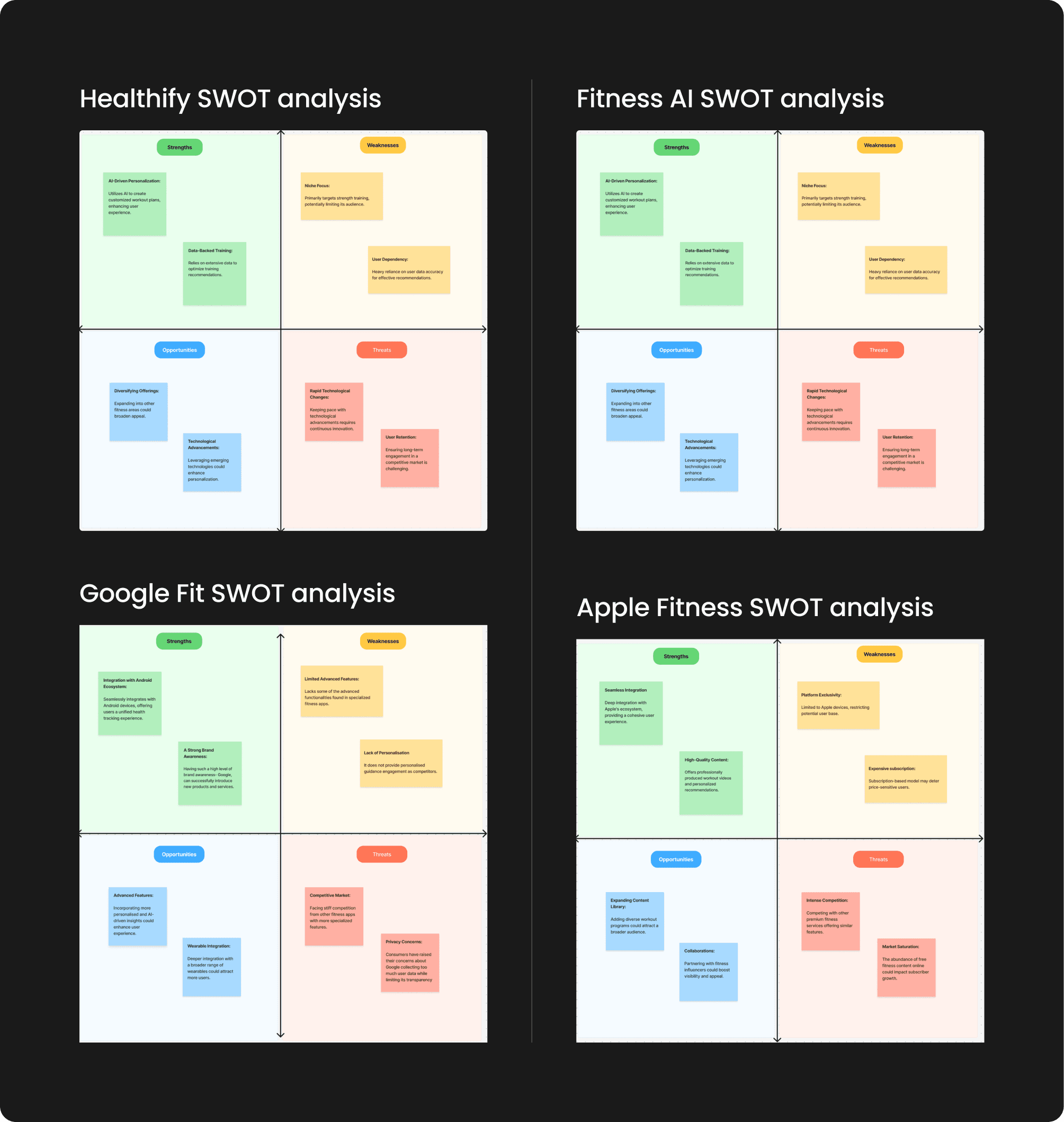
SWOT Analysis of the competitors
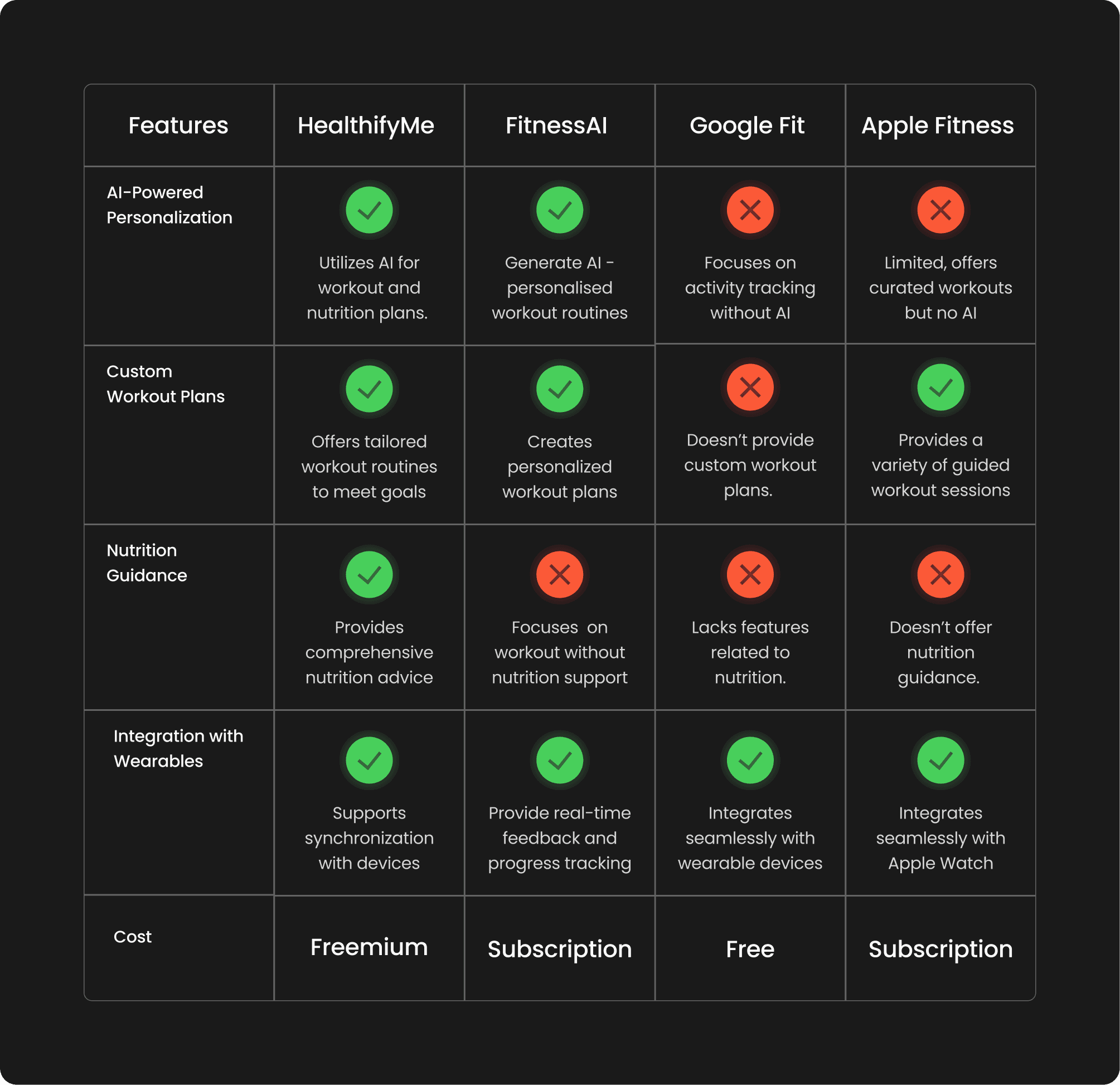
Comparative Analysis
Primary Research
I conducted a user survey on Google Forms that consisted of relevant questions based on their daily routine, fitness challenges, diet preferences, health motivation, and demographics.
Survey Results based on our target audience
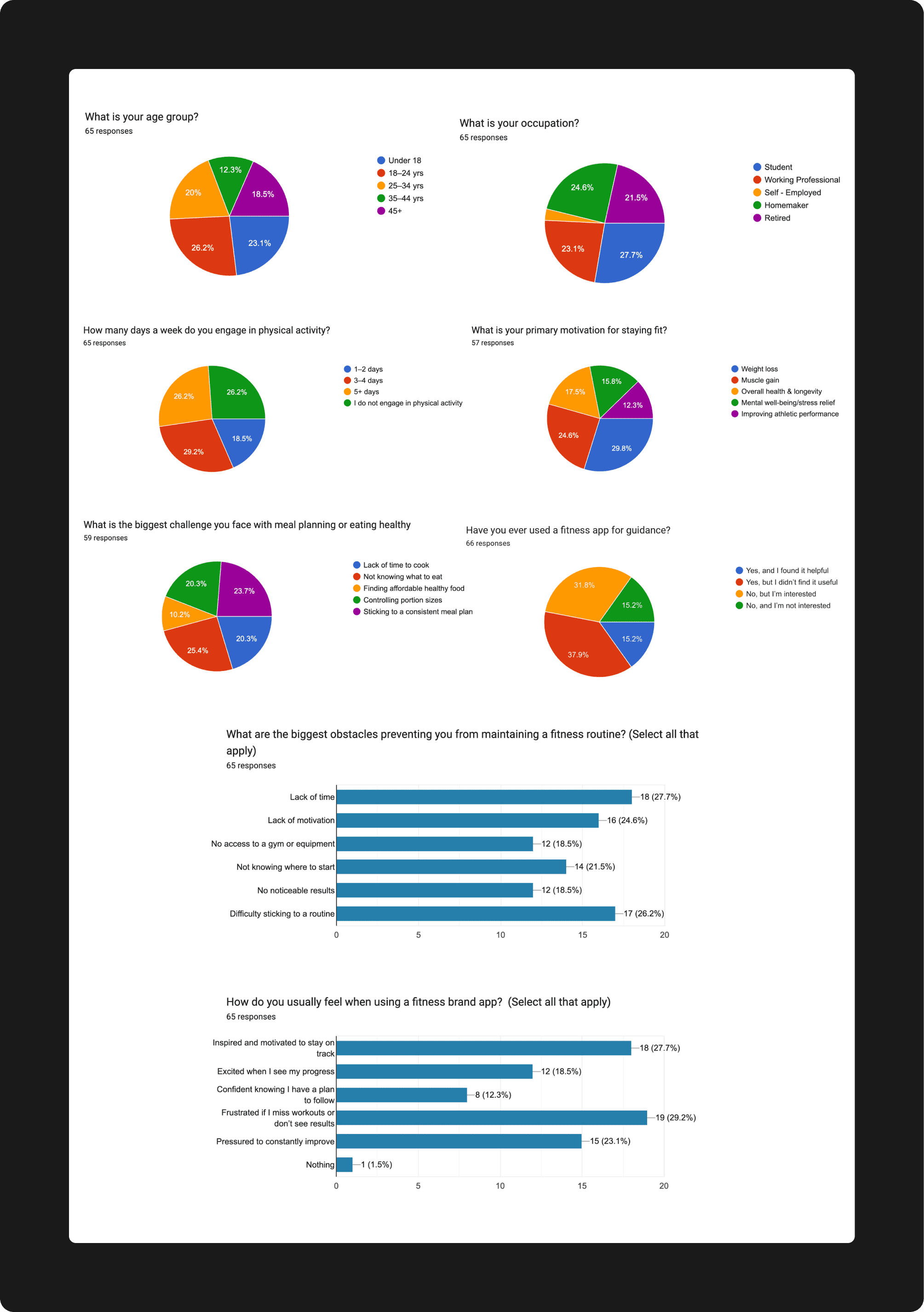
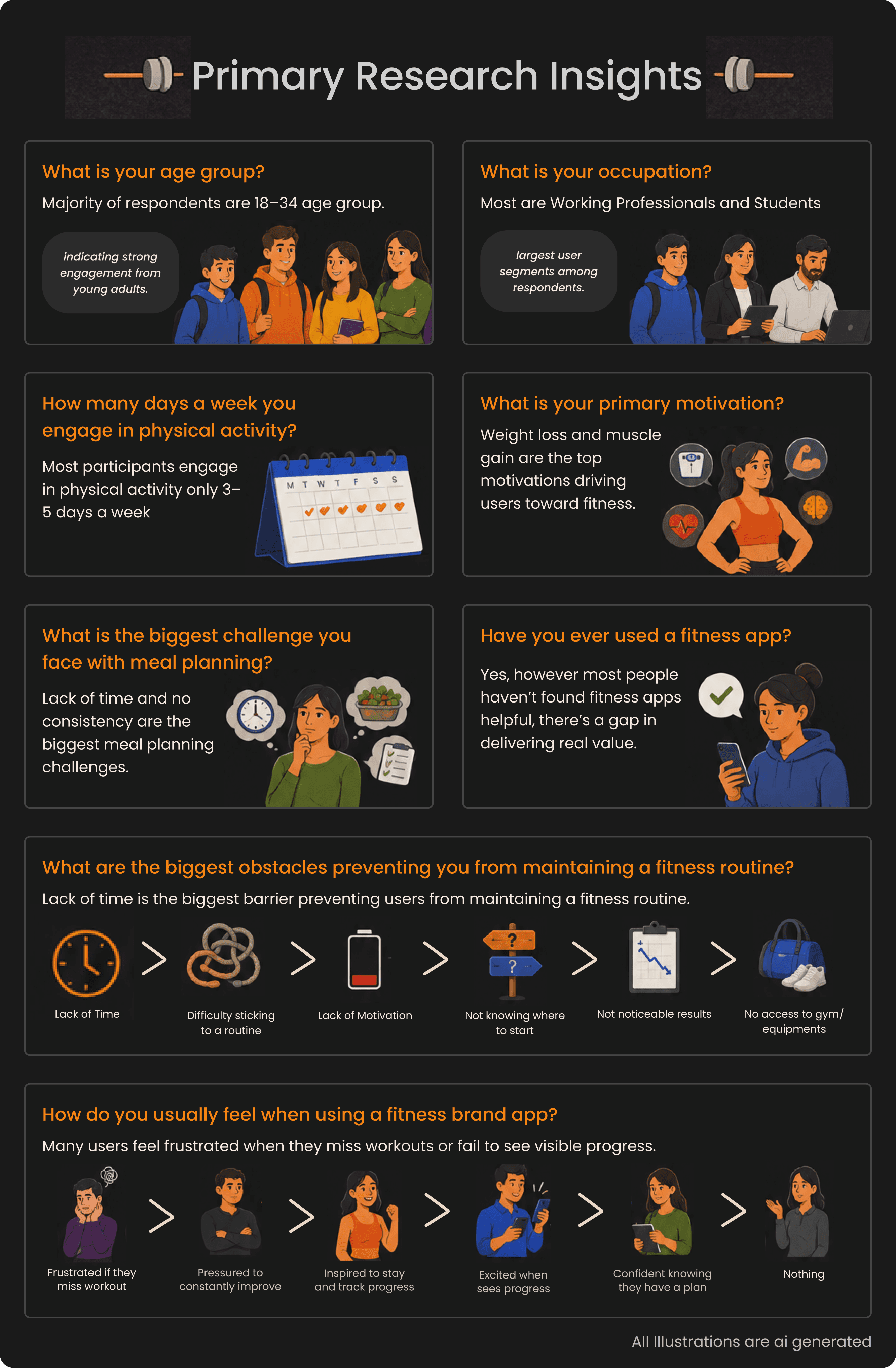
Received 65 survey responses which is fair number to start validating insights.
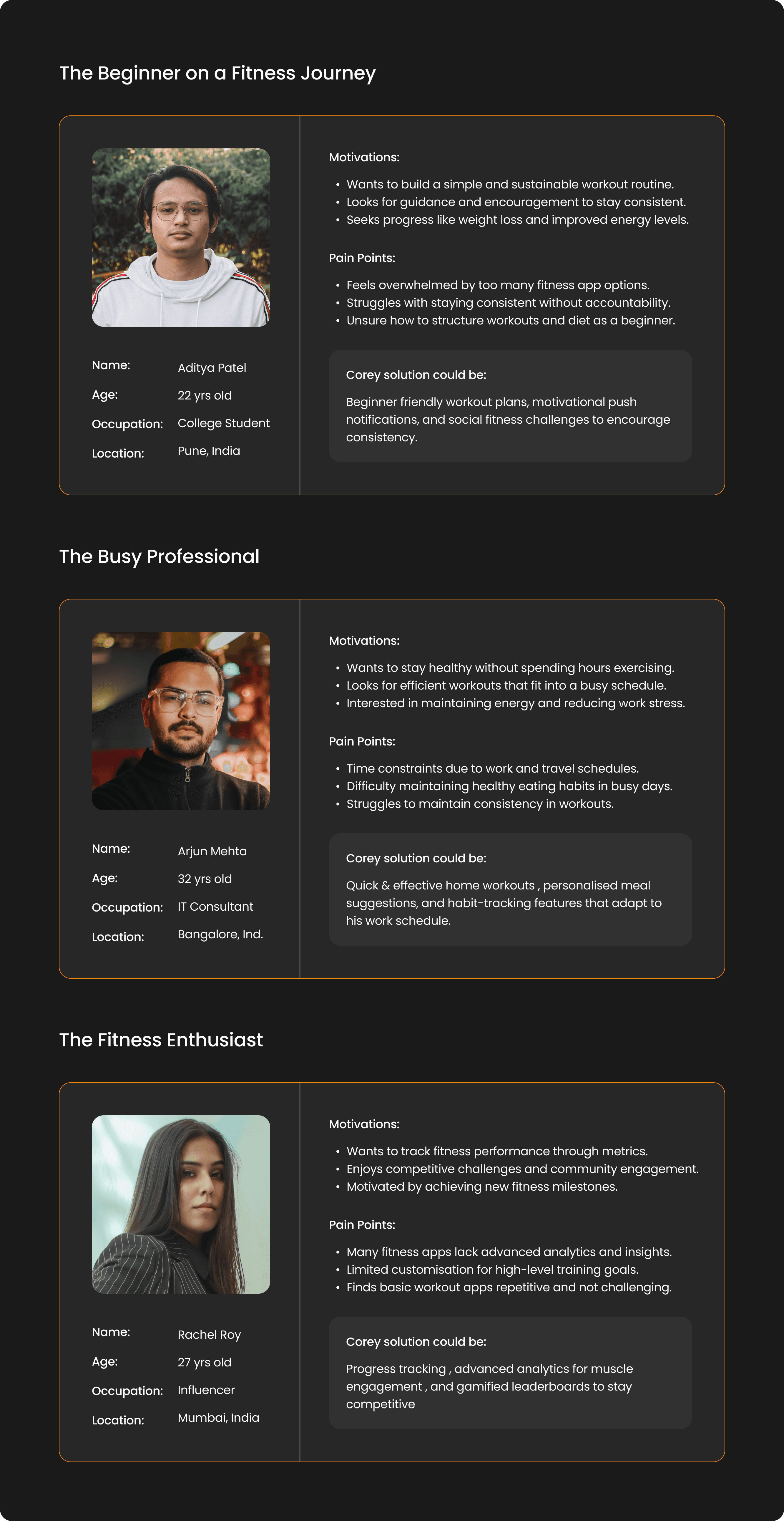
User Personas
App features
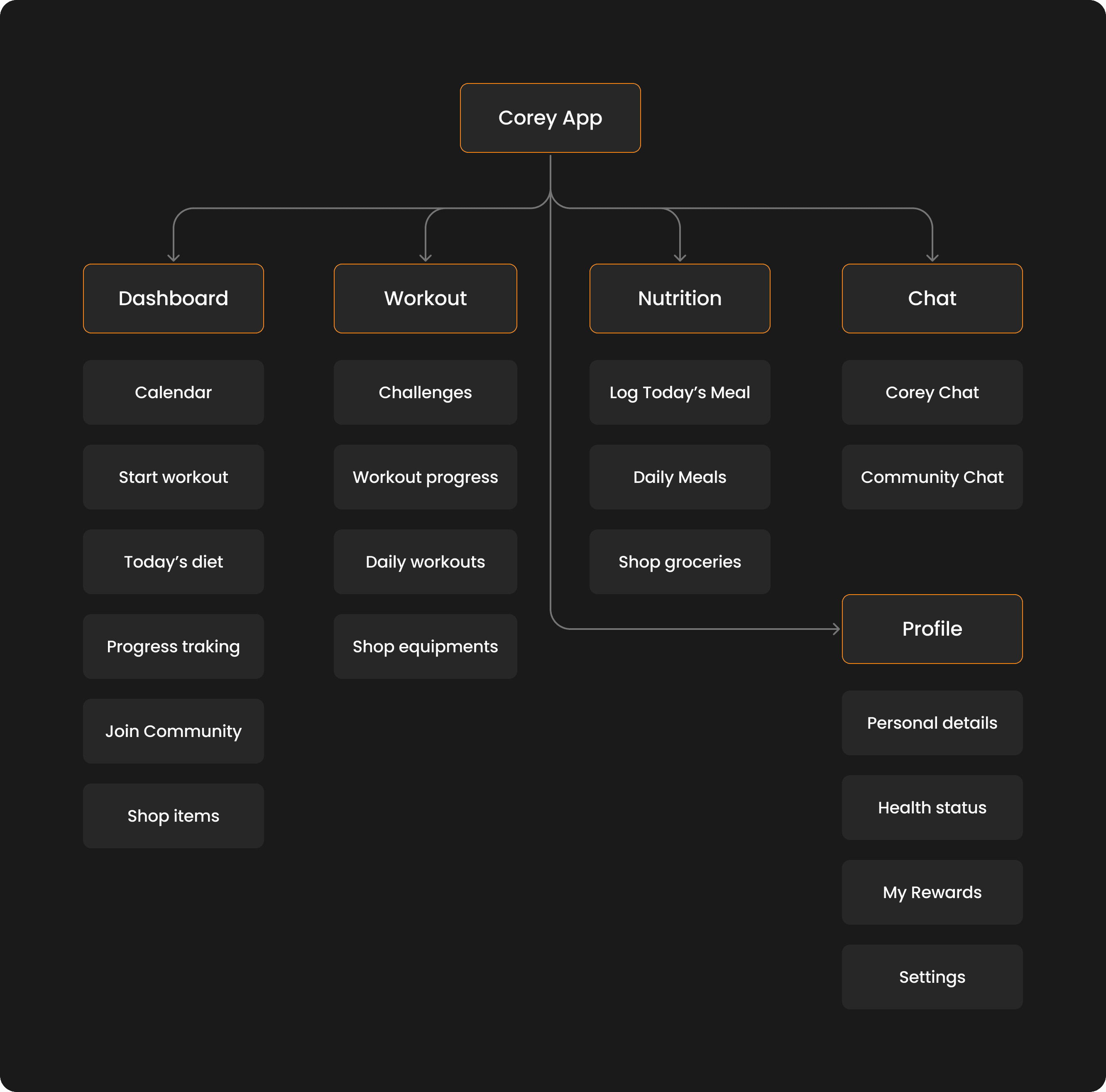
Based on the insights derived from primary and secondary research, I decided to include these features in the app:

Sitemap of the Corey Fitness App
Style guide to begin with
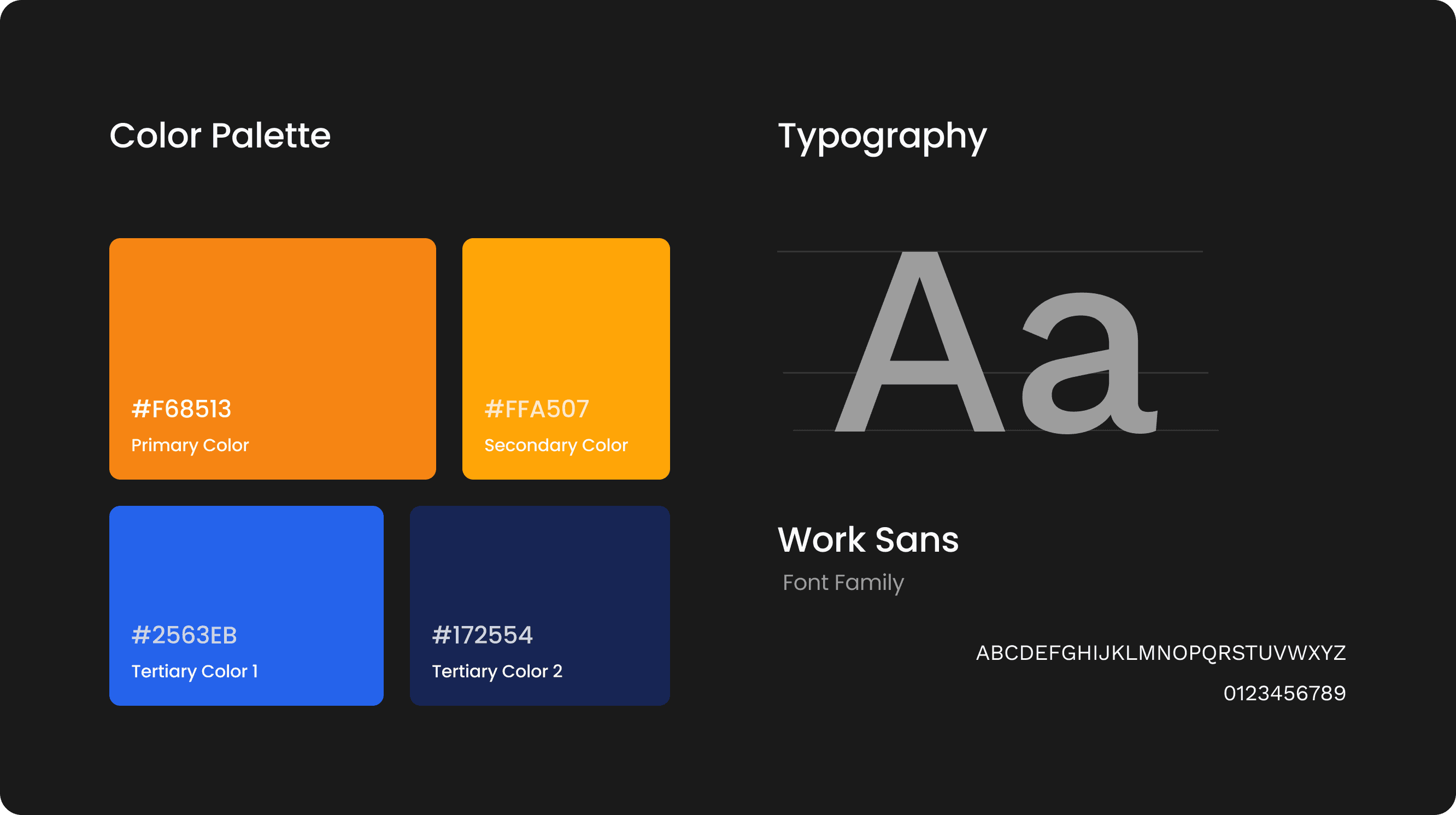
The color palette consists of orange as the primary color and chrome yellow as the secondary color that shows energy and motivation. Blue color shade as tertiary gives a feel of professionalism and premium. The Work Sans typeface is modern, clean and highly legible.
References
Brand Positioning
To cater to the user needs and pain points, positioning the brand Corey as a holistic, AI-powered personal trainer that provides workout guidance and meal planning through interactive mascot engagement.
Mascot Design

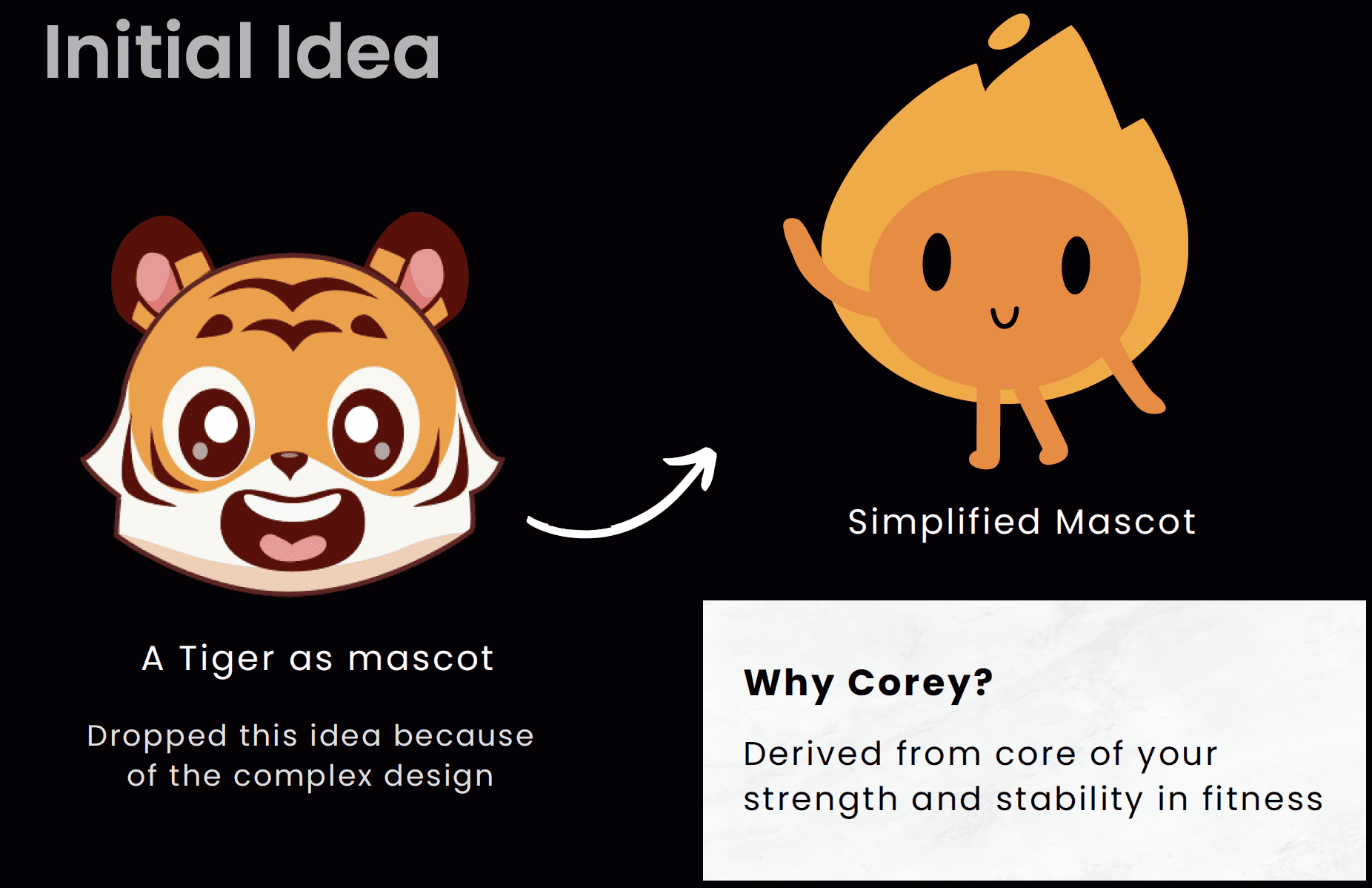
Corey is an AI-powered fitness companion that offers personalized guidance and motivation to help people achieve their health goals.
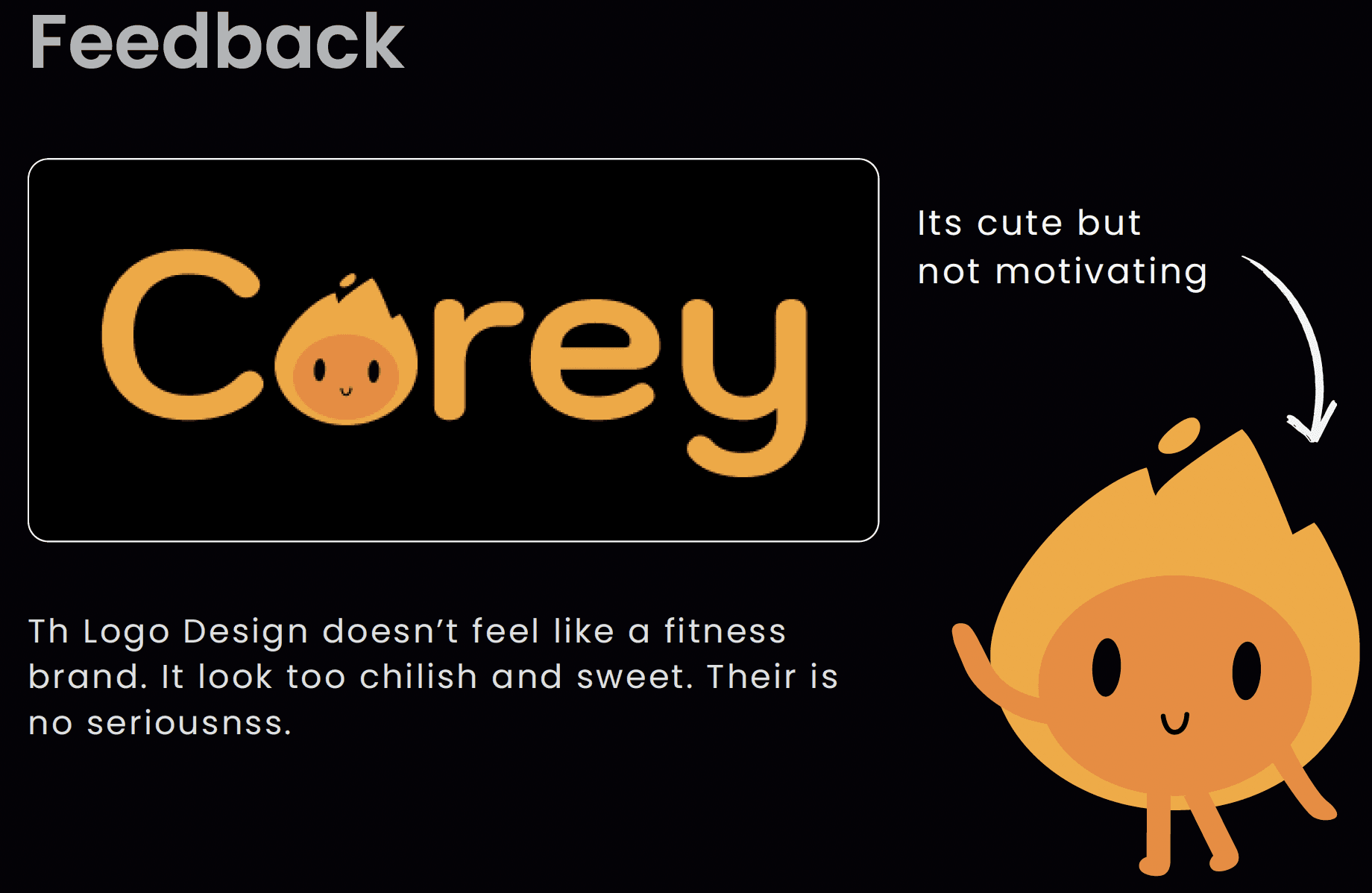
Logo Design Process
Ideation

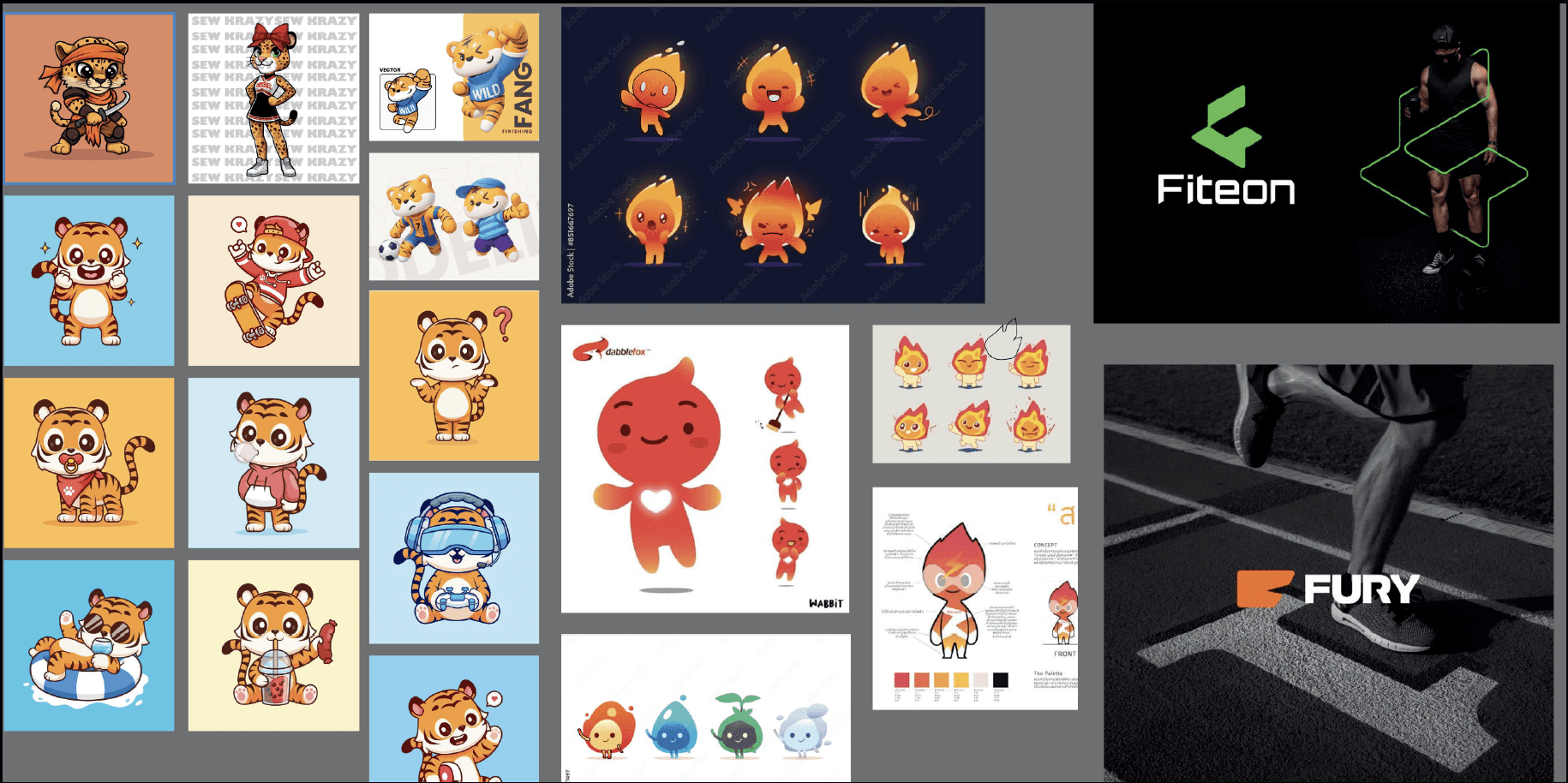
Visual Inspiration

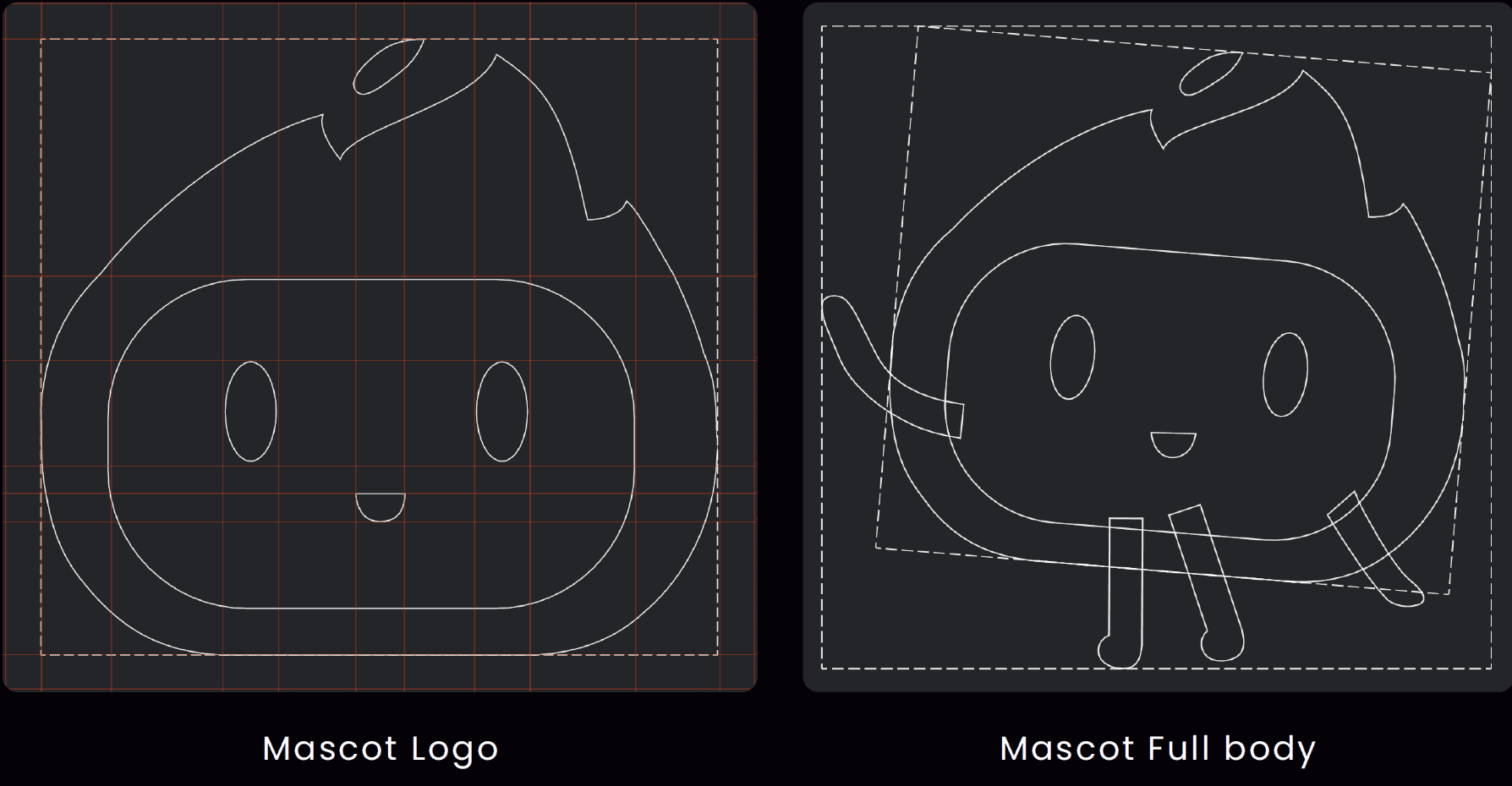
Guidelines

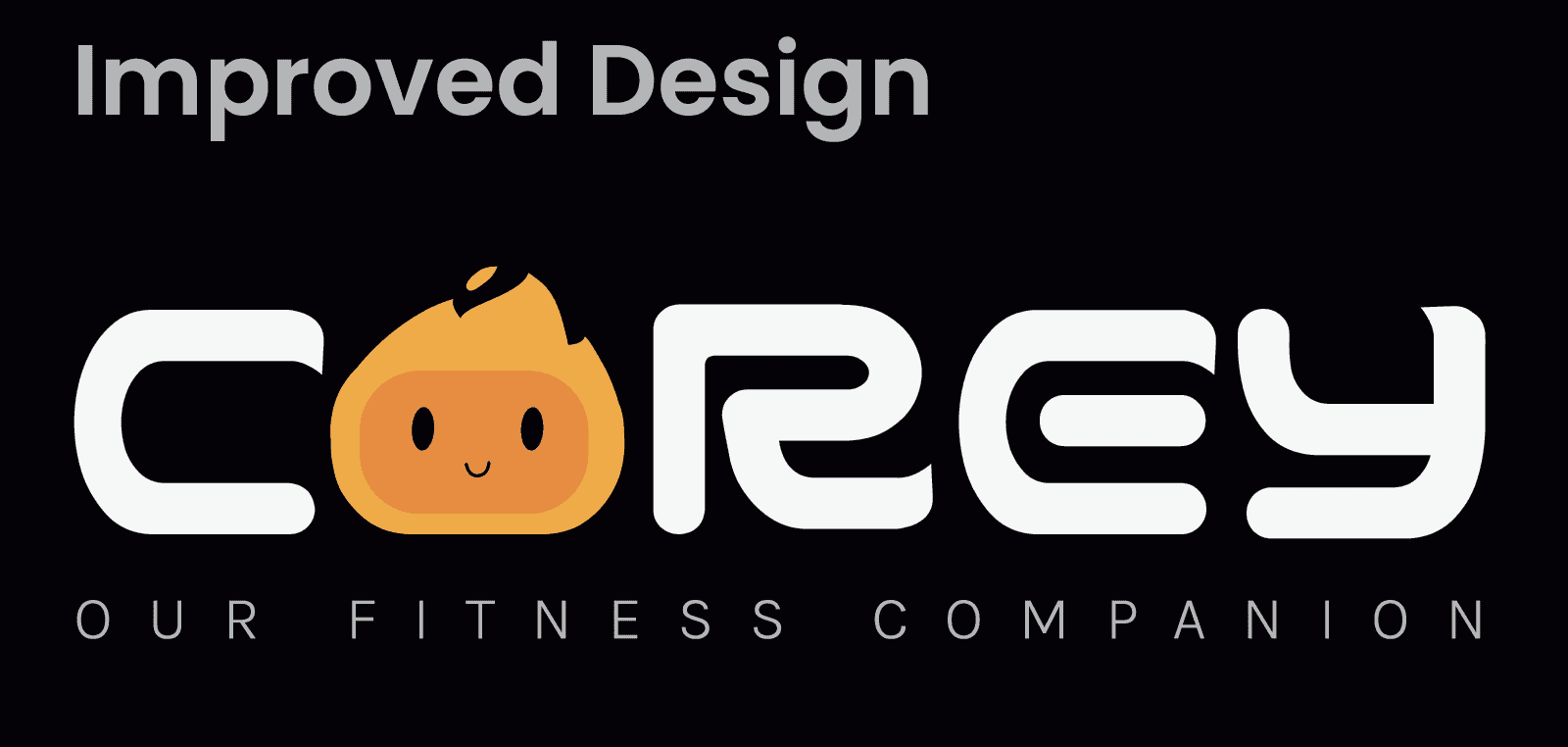
This is the final logo approved by the faculty of Communication Design and is pitched to the jury.

Recently I tweaked the logo by changing the mascot's face expression. Now the brand is more expressive, more memorable, and more aligned with its motivational positioning.
UI Designs
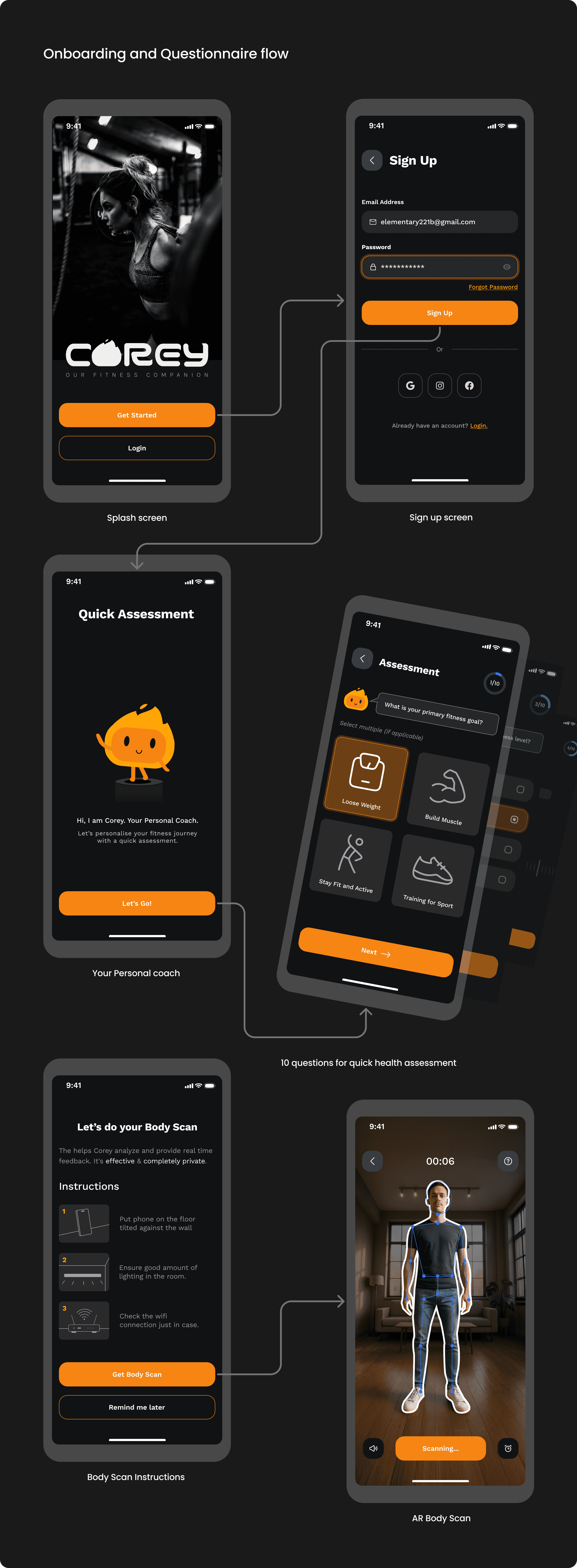
Onboarding flow
The onboarding flow goes beyond by combining a quick assessment and an AR body scan to deliver a truly personalised experience. It consists of a goal-based questionnaire and a real-time body scan using augmented reality. A clean, intuitive UI with warm orange tones on a dark background
Home Dashboard
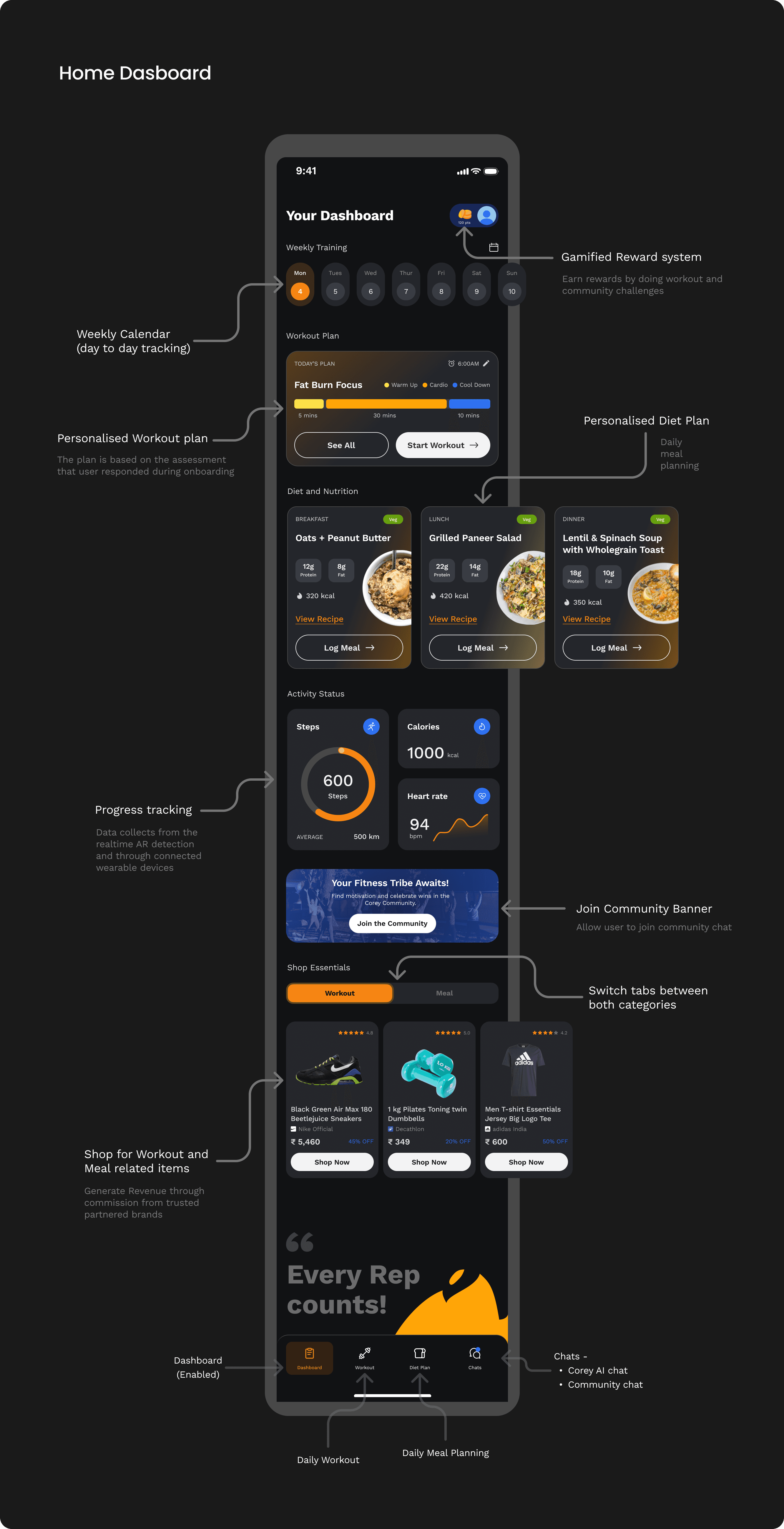
It showcases a weekly training calendar, a personalized workout plan, daily diet plan, along with progress tracking data such as steps, calories, and heart rate. It promotes engagement with a gamified reward system and a community banner that connects users with peers. Additionally, an in-app shop for workout and meal essentials, featuring partnered brands.
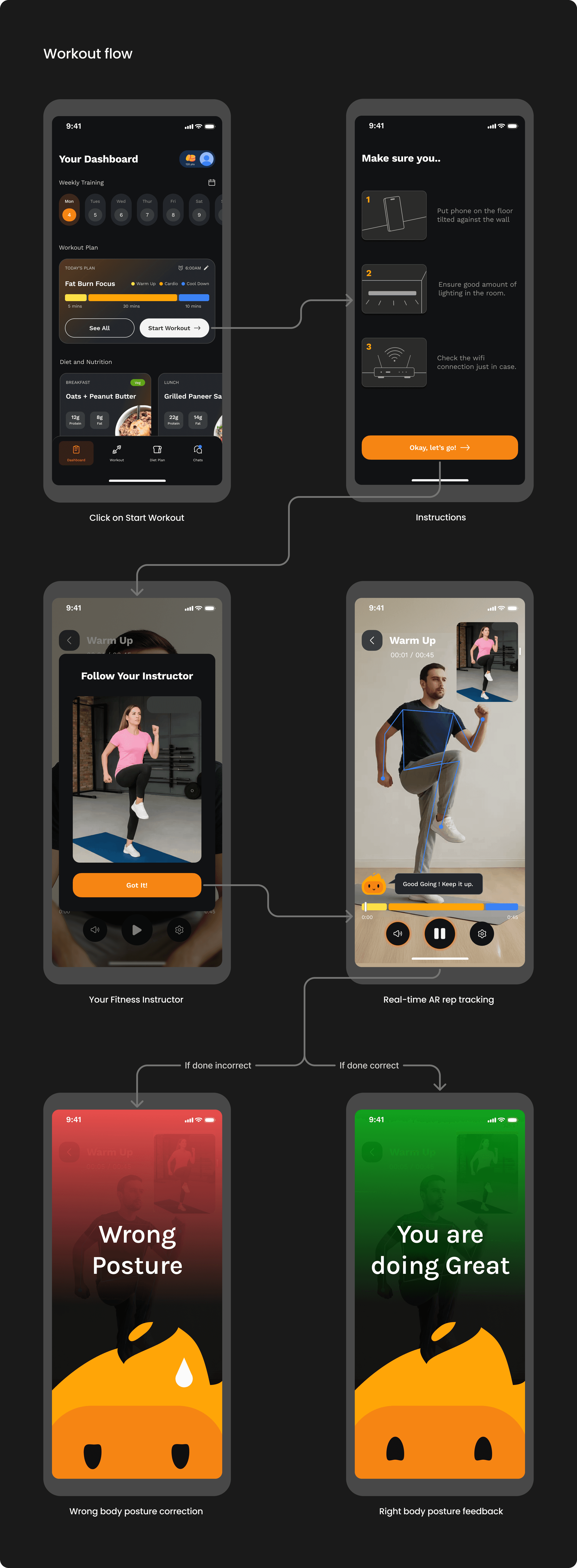
Personalized workout session
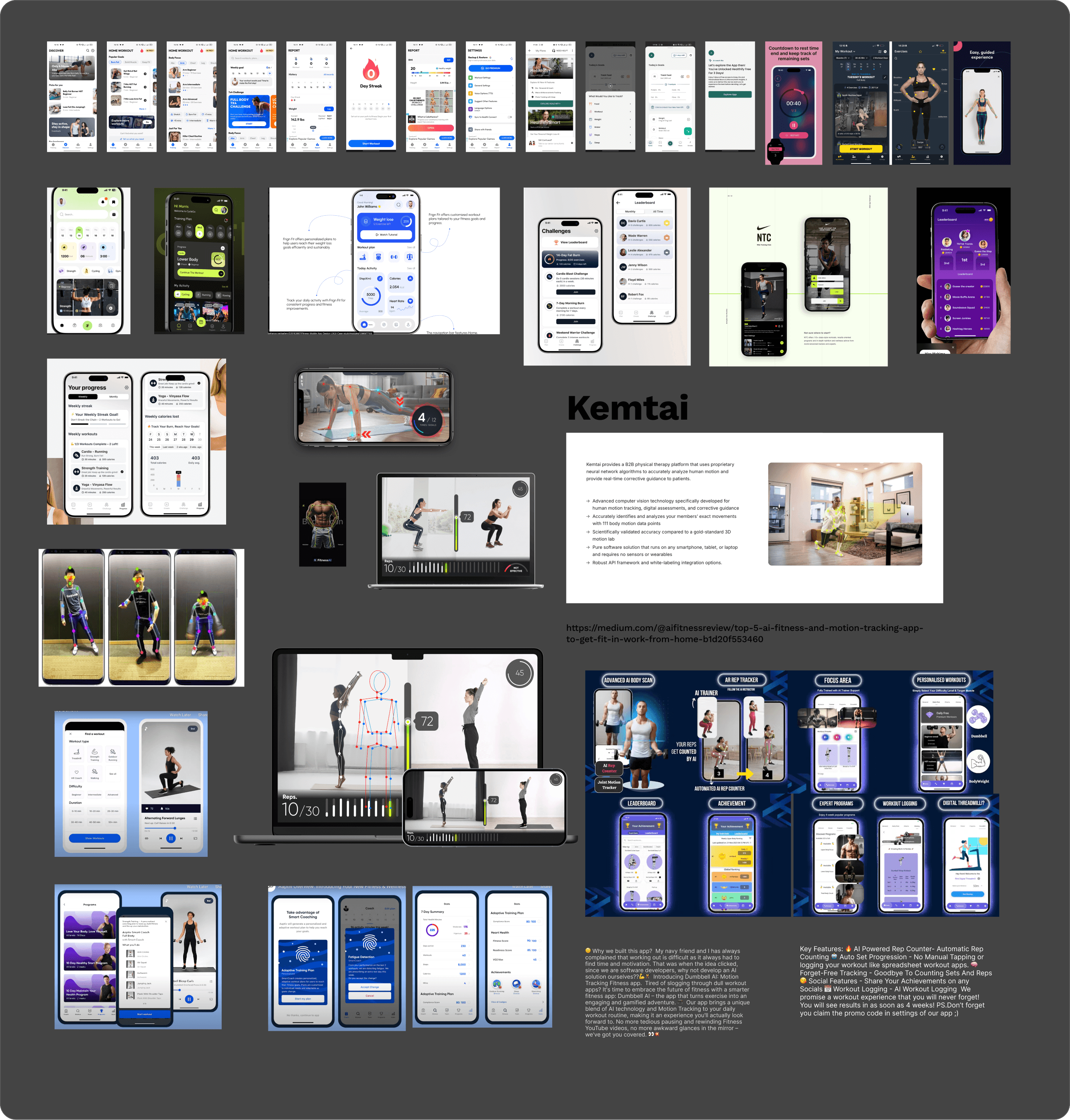
I explored the existing AR-based solutions and found features like body scanning for accurate measurements (as in Nike Fit), virtual coaching through camera overlays (Peloton AR, Mirror by Lululemon), and interactive cycling or running in virtual environments (Zwift). In healthcare, the Kemtai app is an AR-enabled physiotherapy platform.
Workout Page
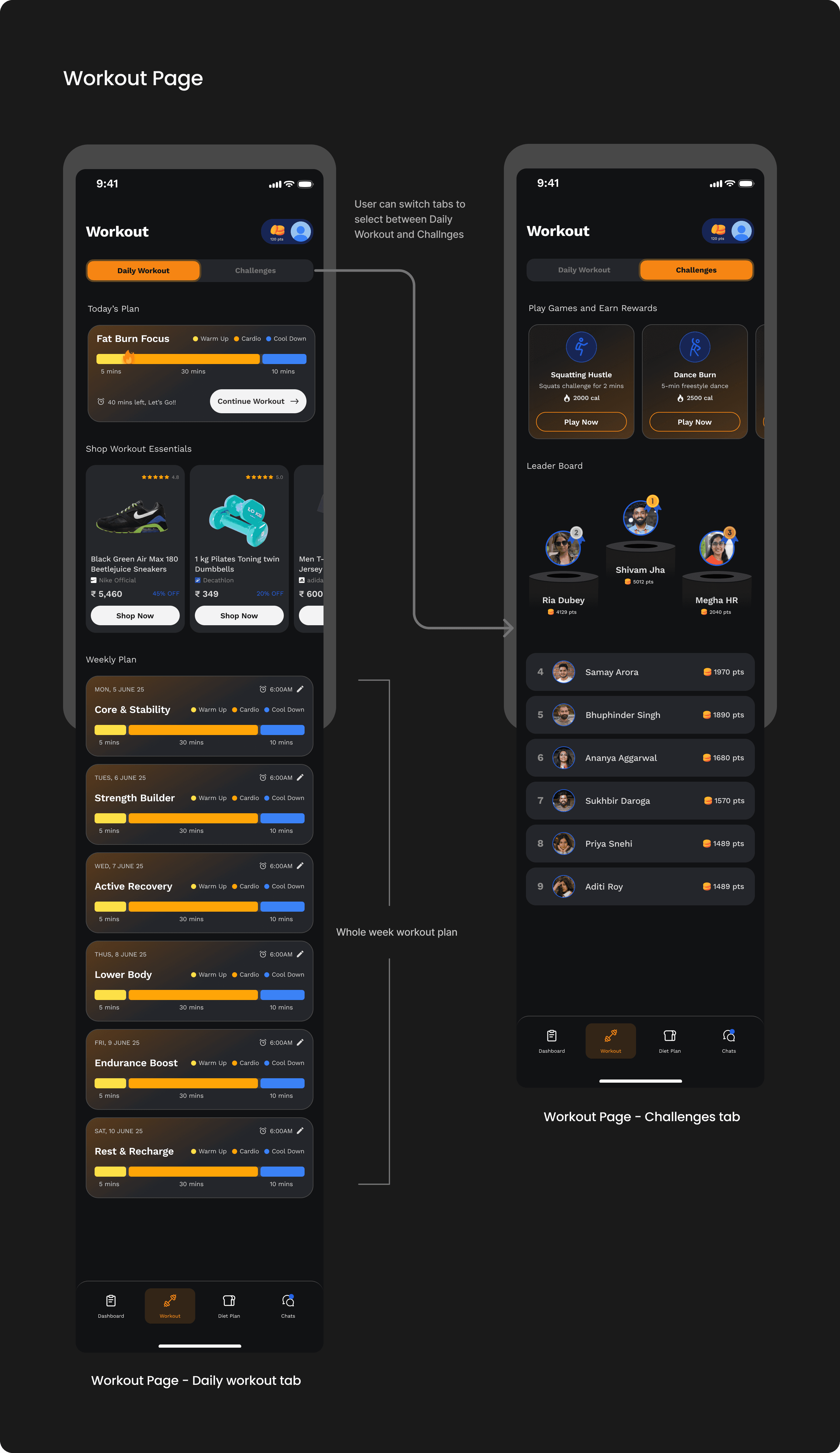
The workout page consists of daily workout plans and challenges. For each workout session and gamified challenge, the user can earn rewards that they can use as discount coupons and shop from the app. Users can buy Corey merch and other brands' workout-related essentials.
Diet Plan and Chat Page
The Diet Plan page shows curated meal plans for morning, afternoon, and night. It also allows to shop for food essentials and provides access to whole week diet plan
The Chat page provides a safe space for users to interact with Corey AI, and they can also connect with like-minded people in the community chat.

Watch the Prototype video below. 👇
Maximise to view clearly
Usability Testing
I reached out to people of my target user groups to test the app prototype.


Thank you.